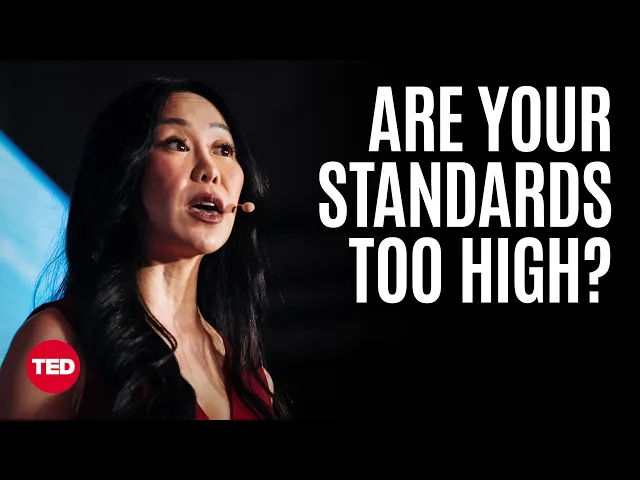
Are Your Dealbreakers Sabotaging Your Love Life? | Amy Chan | TED: transcript
- TED
- Published
- Added
- 14:52
- English
AI summary
AI-generated from the transcript below. Check anything that matters against the video.
In this TEDxVancouver talk, relationship expert Amy Chan argues that modern daters are in a "relationship recession," citing a Match and Kinsey Institute study finding that half of US singles went on zero dates last year. She identifies three forces working against connection: negativity bias, which makes the brain scan for flaws on dates; a culture that treats flaw-hunting as a collective sport and rebrands unrealistic expectations as high standards; and dating apps that train people to assemble partners like Build-a-Bear while comparing real people to curated highlight reels. She cites research by Samantha Joel, who with 85 scientists analyzed data from 11,000 couples and found shiny qualities barely predicted relationship happiness or stability, while quiet qualities like commitment, feeling appreciated and handling conflict did. Chan offers three fixes: cultivate awe before dates to prime the brain for connection, distinguish dealbreakers from preferences, and date outside your type. She closes with her own story of nearly rejecting her partner Paul over a bad photo.
Key points
- Amy Chan says we are in a "relationship recession"; a Match and Kinsey Institute study found half of US singles went on zero dates last year.
- Negativity bias, evolved to spot threats like tigers and snakes, now makes daters scan for flaws and find them everywhere.
- Social media turned flaw-hunting into a collective sport, rebranding unrealistic expectations as "high standards."
- Dating apps train people to customize partners like Build-a-Bear, and hedonic adaptation means shiny qualities fade in six to 24 months.
- A study of 11,000 couples by Samantha Joel and 85 scientists found shiny qualities barely predicted happy, stable relationships.
- Quiet qualities matter most: commitment, feeling appreciated, and how well a couple handles conflict.
- Chan advises cultivating awe in micro-doses before dates, separating dealbreakers from preferences, and dating outside your type.
- Chan almost rejected her partner Paul over a photo; they have now been together seven years in her healthiest relationship.
Chat with AI
Ask about this video. Answers come from its transcript, with links to the moments they use.
Free with a Google, Telegram or email account.
Sign in to chatTranscript
- 0:05
I'm sitting with my client. Let's call her Lisa. She looks me straight in the eye and tells me she's ready for a relationship. So I ask what she's looking for in a partner. Someone kind, emotionally available, family-oriented. Great. We're off to a good start. She then tells me her deal breakers. No one who’s selfish, dishonest [or] rude to service staff. Yes, reasonable. She then adds, no one under six feet tall.
- 0:38
(Laughter) Hmm. I’m not here to judge -- we all have our lists. But the six-foot height requirement? The math isn't mathin'. In America, about 14 percent of men are six feet or taller. Her dating pool just turned into a puddle. Now I’m not here to just pick on height. You know, replace that with status, income, looks, if they're a Leo or, God forbid, a Gemini.
- 1:13
(Laughter) The specifics change, but the pattern remains the same. People say they want love and then eliminate the very people they can build it with. I've seen this for two decades as a dating columnist and running “breakup bootcamps.” I've helped people who were perpetually single, stuck in situationship purgatory, create healthy, lasting relationships.
- 1:43
But only after they stopped doing the very thing they thought was protecting them. That's what we're going to unpack. People are not forming relationships like they used to. Last year, a study by Match and the Kinsey Institute found that half of US singles went on a total of zero dates. (Laughter) Researchers are warning we are in a “relationship recession.”
- 2:14
(Laughter) So what's driving this? There are three forces working against us: our brain, our culture and technology. Let's start with the brain. Human beings evolved with negativity bias. A hundred thousand years ago, if you missed a threat -- a tiger in the grass, a snake by your foot -- you could die. So the brain got really good at scanning for signs of danger.
- 2:47
Now this wiring kept our ancestors alive. This same wiring is wreaking havoc on our dating lives. Imagine you're on a date. About an hour in, the conversation's flowing, they're laughing at your jokes, and then they tell you they don't really read books. They prefer podcasts instead. (Laughter) An alarm bell goes off in your brain and you start panicking.
- 3:18
"What else is wrong with this person?" (Laughter) Once your brain starts scanning for flaws, it starts finding them everywhere. Suddenly, the way they chew is a little too loud. They're not making enough eye contact. They're making too much eye contact. Did they just say JIF instead of GIF? (Laughter) Your brain decides this person is no longer a romantic prospect and banished to the ick list they go.
- 3:50
Now if this were just about our brains’ wiring, we could override this. But there’s a second force working against us: our culture. Our culture has turned flaw-hunting into a collective sport. Just scroll through social media. What do you see? Dating horror stories. Red flags to look out for. It's resulted in a generation of daters who are quick to ick, constantly looking for what could go wrong instead of what could go right.
- 4:28
Unrealistic expectations get rebranded as “high standards.” Quirks become deal breakers. I see this constantly in my work, and I'm guilty of it, too. One Saturday morning, I'm walking with my friend Vishal to get a coffee. Vishal is a superconnector. He knows everyone. I was single for five years, so I asked if he had anyone to set me up with.
- 5:03
I remember the look of excitement in his eyes when he's like, "Oh my gosh, I have the best person for you. He's super smart, he's funny, really good guy." He then takes out his phone and shows me his picture. I take a look. It's a guy with dark hair and he's leaning back in a chair with half a grin. He was giving ... cocky-finance-bro vibes. (Laughter) So I hand the phone back to Vishal and asked if he had anyone else.
- 5:36
(Laughter) Let's just say Vishal never tried to set me up with anyone ever again. Now I made a snap judgment off of one photo. But imagine doing this a hundred times a day. This brings me to the third force: technology. Dating apps have changed the way we meet people, but they've also changed the way we think about people.
- 6:08
The endless options train us to assemble partners like Build-a-Bear. I'll take this height, this income level, this love language, customize a perfect person and add to cart. (Laughter) On top of that, performative romance on social media has become the new fairy tale. We compare real human beings with curated, filtered, perfected highlight reels.
- 6:41
Of course, nobody measures up. It all points to the same problem. We are chasing shiny qualities. The things that look good on paper, that appeal to the ego. But guess what? In six to 24 months, that chiseled jawline, that silky-smooth hair? Your brain adapts.
- 7:13
Psychologists call this hedonic adaptation. What once drew you in and gave you butterflies becomes the new normal. We are over-optimizing for what fades the fastest. So what actually does predict lasting love? A professor named Samantha Joel wanted to find out. So she assembled a team of 85 scientists, and together, they analyzed data from 11,000 couples.
- 7:46
Turns out, we've been looking for the wrong things. All that stuff we obsess over in the early stages of dating, the shiny qualities, had almost zero ability to predict if a relationship would be happy or stable. But you know what did? The quiet qualities. Whether your partner is committed to you. Whether you feel appreciated by them.
- 8:19
How well you handle conflict together. The stuff that only shows up on a random Tuesday when you’re sick, and they bring you soup without you having to ask. We are undervaluing what matters in the long term. So what do we do about this? First, create a connection reset. We know [that] on a date, your brain is looking for what could go wrong.
- 8:50
But there's an antidote to this. Awe. Awe is that feeling of being in the presence of something vast, something bigger than yourself. Research shows that experiencing awe makes people more open, more curious, more connected to others. And you don't have to wait for a solar eclipse to feel it. You can actually cultivate awe in micro-doses. Listen to a song that moves you.
- 9:23
Watch the sunset. Even watching a video of the Northern Lights can spark awe. So next time before you go on a date, spend 15 minutes cultivating awe. This will prime your brain for connection instead of critique. Next, know the difference between a deal breaker and a preference. A deal breaker is something that would make a healthy relationship impossible.
- 9:57
You have different core values. You want children, they don't. A preference, though, is a nice-to-have, not a need-to-have. Would it be nice if they liked hiking as much as you do? Sure. But will it make or break a relationship? No. Third, conduct your own dating experiment. Commit to going on dates with people outside of your type.
- 10:29
Stop putting so much weight on the shiny qualities and consider what actually matters in a partnership. Not just in two months, but in 20 years. One sunny morning, I’m on my couch, and I’m scrolling through a dating app. I match with this guy. He’s got brown hair, a scruffy beard and a warm smile. After messaging back and forth, it's apparent that we have a friend in common, Vishal.
- 11:02
(Laughter) So I text Vishal. "Hey, do you know this guy named Paul?" Vishal calls me right away. He’s like, "Amy, I tried to set you up with him and you said no." (Laughter) “Remember the photo of the cocky finance bro?” Turns out that was taken when Paul face-planted on the bunny hill while learning how to ski. Oops. We've now been together for seven years.
- 11:36
(Applause) It's the healthiest relationship I've ever been in. But not by Instagram standards. A few years ago, my father got really sick. I spent a year helping him in his last stage of life.
- 12:10
We were in and out of the emergency room, and I was so overwhelmed. I felt like I was breaking into a million pieces. I was a shell of a human being and not fun to be around. Paul never made me feel like I was too much. He knew exactly when I needed a hug or when I needed space. He would cook me meals. And because he knows that I always forget to drink water, every morning, he would fill a pitcher of water and place it on my desk.
- 12:48
He still does that to this day. Apparently my love language is hydration. (Laughter) These aren't grand gestures. It's the boring, unsexy stuff. The stuff that doesn't get a photo op or make it to the grid. But it's what actually matters in a partnership. To think I almost lost seven years of the healthiest love I know because of a story I made in a snap judgment.
- 13:30
So the question I want to leave you with is this. What if the filter you're using to protect yourself is the very thing that is stopping you from creating the connection you desire? Because the right person for you, they might not come in the package that you expect. They might be shorter than you planned. Quieter than you imagined.
- 14:03
Different from your type. But they might also be kind when you're struggling. Steady when life gets hard. The one who shows up again and again, long after the spark has settled into something deeper. Don't let a bad photo, a snap judgment, a superficial preference cost you that.
- 14:38
Make sure your filter is catching the right things. Thank you. (Applause)
Questions
AI-generated, and answered only from the transcript.
What is the "relationship recession" Amy Chan describes?
She says people are not forming relationships like they used to, citing a Match and Kinsey Institute study finding that half of US singles went on a total of zero dates last year. Researchers are warning this is a relationship recession.
What did Samantha Joel's study of couples find?
Joel assembled 85 scientists who analyzed data from 11,000 couples. The shiny qualities people obsess over in early dating had almost zero ability to predict whether a relationship would be happy or stable, while quiet qualities like commitment, feeling appreciated and handling conflict did.
What is hedonic adaptation and why does it matter in dating?
Chan describes it as the brain adapting to what once drew you in, so that a chiseled jawline or silky hair becomes the new normal within six to 24 months. She says we are over-optimizing for what fades the fastest.
How does Amy Chan suggest countering negativity bias before a date?
She recommends cultivating awe in micro-doses, such as listening to a moving song, watching a sunset or viewing a video of the Northern Lights. Spending 15 minutes on this before a date primes the brain for connection instead of critique.
What is the difference between a dealbreaker and a preference?
A dealbreaker is something that would make a healthy relationship impossible, such as different core values or disagreeing about having children. A preference is a nice-to-have, like shared love of hiking, that will not make or break a relationship.
How did Amy Chan meet her partner Paul?
She matched with him on a dating app and discovered they had a friend in common, Vishal, who had tried to set them up before. She had rejected him based on a photo that turned out to show him face-planting on a bunny hill while learning to ski; they have now been together seven years.
Related transcripts
Dating, Solved: Why Finding the “Right Person” Feels So Hard Now
In this episode of Solved, Mark Manson and co-host Drew argue that most people are not bad at dating because of who they are, but because…
Models by Mark Manson Summary 📘 The Brutally Honest Dating Advice Every Man Needs
This Visual Books audiobook summary covers Mark Manson's Models: Attract Women Through Honesty, arguing that genuine attraction comes from…


Latest transcripts
+ Agua + Carbono Una mirada a través del CIHH
El video del canal UTPPanama presenta el trabajo del Centro de Investigación Hidráulica e Hidrotécnica (CIHH) de la Universidad Tecnológica…
The Work of the Co Creator: Visualization II - Hugh McCague
In this RosicrucianTV presentation, Hugh McCague continues a series on mental creation or visualization as a central Rosicrucian exercise…
The Work of the Co-Creator - Visualization - Hugh McCague
This RosicrucianTV presentation by Hugh McCague explores visualization, or mental creation, as one of the central Rosicrucian exercises for…
Rosicrucian Exercises: A Foundation for Daily Living VI - Hugh McCague
In this sixth installment of the Rosicrucian Exercises series, Hugh McCague of the Rosicrucian Order, AMORC, guides viewers through an…
Rosicrucian Exercises: A Foundation for Daily Living V - Hugh McCague
This video is the fifth installment in a Rosicrucian Order AMORC series on Rosicrucian exercises as a foundation for daily living, presented…
Rosicrucian Exercises: A Foundation for Daily Living IV - Hugh McCague
In this RosicrucianTV session, Hugh McCague guides viewers through a series of Rosicrucian exercises as a foundation for daily living. He…